Fecha de evento: 22/04/2024
Hora: 11:00-13:00
Lugar: Facultad de Psicología y Educación, Universitat de Girona
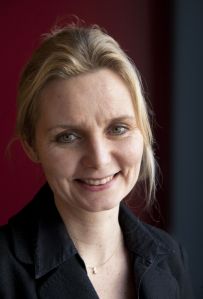
Maria De Haan – Department of Pedagogical and Educational Sciences; Utrecht University, Netherlands
On the occasion of the publication of a new volume edited by Ola Erstad, Bente E. Hagtvet, and James V. Wertsch, we are organizing a seminar with two of the authors included in the book: Maria de Haan (Utrecht University) and Alfredo Jornet (University of Girona). The book, “Education and Dialogue in Polarized Societies” (Oxford University Press, 2024) discusses the role of dialogue and dialogical perspectives in education in the face of growing societal challenges, with a particular focus on challenges of polarization. In the seminar, and drawing from theoretical and empirical insights on dialogue in multicultural education contexts and polarization, Maria de Haan will discuss her chapter “The Limits and Potential of Dialogue to Counter Polarization in Educative Settings”. Alfredo Jornet, in turn, will provide a critical commentary on the book as a whole, drawing from his chapter “Not Just Change: Dialogue in Times of Crisis”.
Maria de Haan is full professor of intercultural education at the Department of Education & Pedagogy at Utrecht University since 2018. She held an Endowed Chair on issues of Youth and Education in the multicultural society at Utrecht University between 2008 and 2017. She started her career at the Educational Research Department at Utrecht University (UU) while also coordinating a research based collaboration with the Universidad Nacional in Costa Rica. Her work focuses on processes of learning and socialization in both formal and informal educational settings with an emphasis on cultural diversity and the dynamics of processes of socialization in changing social worlds. A current theme that is addressed in this research is how, in cases of recent migration, informal learning and socialisation patterns take on new forms in response to new cultural ‘contact zones’ and different rhythms of ‘acculturation’ between generations. Additionally, formal (multi-ethnic) educational settings are studied in which the focus is on diversity in the construction of knowledge, the discursive and interactive construction of ethnicity, and diversity in forms of reasoning (e.g. Reshaping diversity in a local classroom, 2005). Since she adopted project leadership of UNION, a city wide initiative to counter radicalization and polarization in Utrecht schools, this line of research has been shifting to issues of polarization in Dutch schools.
 EJES en Red
Deja un comentario